
Your Guide to Spotting Hidden Roof Leaks After a Missouri Pop-Up Storm
Here in the Kirksville area, we’re no strangers to a sudden pop-up storm. One minute the sun is shining, and the next, the sky opens up with heavy rain and wind. While most of us are relieved when our homes weather the storm without obvious damage like a fallen tree limb, the most serious issues aren't always visible. A small, hidden roof leak can go unnoticed for weeks or even months, silently causing rot, mold, and structural damage that can lead to costly repairs down the road.
The aftermath of a storm is a critical time to check on your home's most important protector: your roof. But what should you look for? This guide will walk you through the subtle, sneaky signs of a hidden roof leak so you can catch problems early and protect your home and family.
The Telltale Signs Inside Your Home
The first place to look for evidence of a roof leak isn't outside—it's within your own living space. Water is persistent and will find the path of least resistance, often showing up far from the actual source of the leak. After a heavy rain, take a slow walk through your home, paying close attention to the upper floors and ceilings. Keep an eye out for:
- Mysterious Water Stains: These are the most common indicators. Look for discolored patches on your ceilings or walls, which often appear as yellowish or brownish rings. They might feel soft or damp to the touch.
- Peeling or Bubbling Paint: Moisture getting into the drywall or plaster behind your paint will cause it to bubble, blister, or peel. This is especially common near the corners where walls meet the ceiling.
- A Persistent Musty Odor: If you notice a damp, earthy smell, particularly in your attic, closets, or rooms on the top floor, it’s a strong sign of moisture. This odor is often the first warning of mold or mildew growth, which thrives in damp, dark spaces created by slow leaks.
- Drips or Dampness Around Fixtures: Check around ceiling fans, light fixtures, and ventilation fans. The seals around these installations can be weak points where water might find its way through.
A Safe Look in the Attic
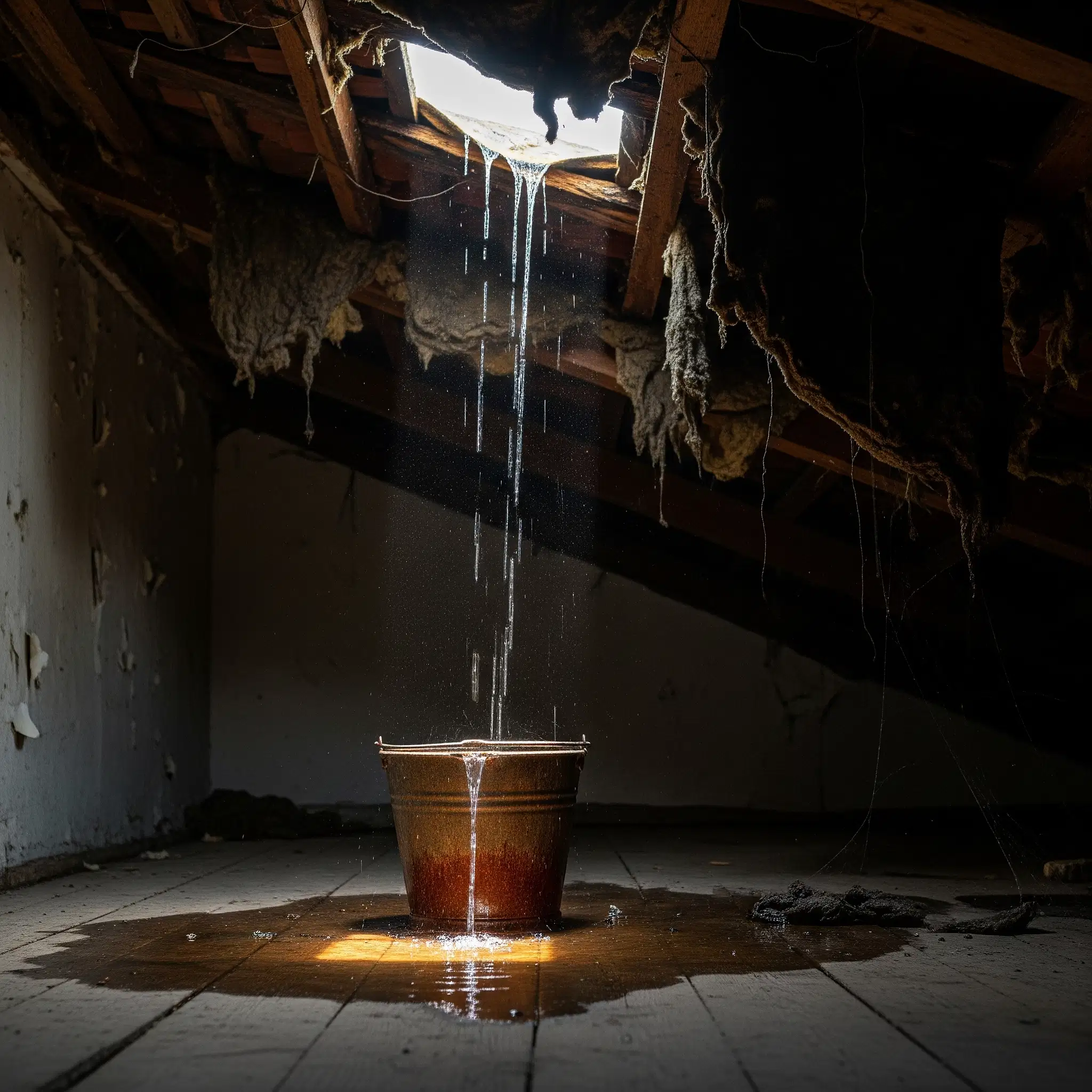
If you can do so safely, your attic is the best place to confirm a suspected leak. It's the frontline where water enters your home, and the evidence here is often much clearer. Before you go up, make sure you have a reliable flashlight and a sturdy ladder. Once in the attic, be extremely careful to only step on the wooden joists or designated flooring—never on the insulation or drywall ceiling below.
Here’s what to search for:
- Wet or Compressed Insulation: Insulation should be light and fluffy. If you see areas that are matted down, discolored, or feel damp, it's a clear sign that water has been present.
- Dark Stains on Wood: Inspect the underside of the roof decking, the rafters, and the support beams. Look for dark, blackish stains, water streaks, or areas that appear rotten or feel soft.
- Visible Daylight: On a bright day, turn off your flashlight and look up. If you see any pinpricks of light shining through the roof, it means you have a direct hole that water can easily penetrate.
- Signs of Mold: Look for black, white, or green patches growing on wood surfaces. Mold requires moisture to grow, so its presence is a definitive sign of a water problem.
What to Look for Outside (From the Ground)
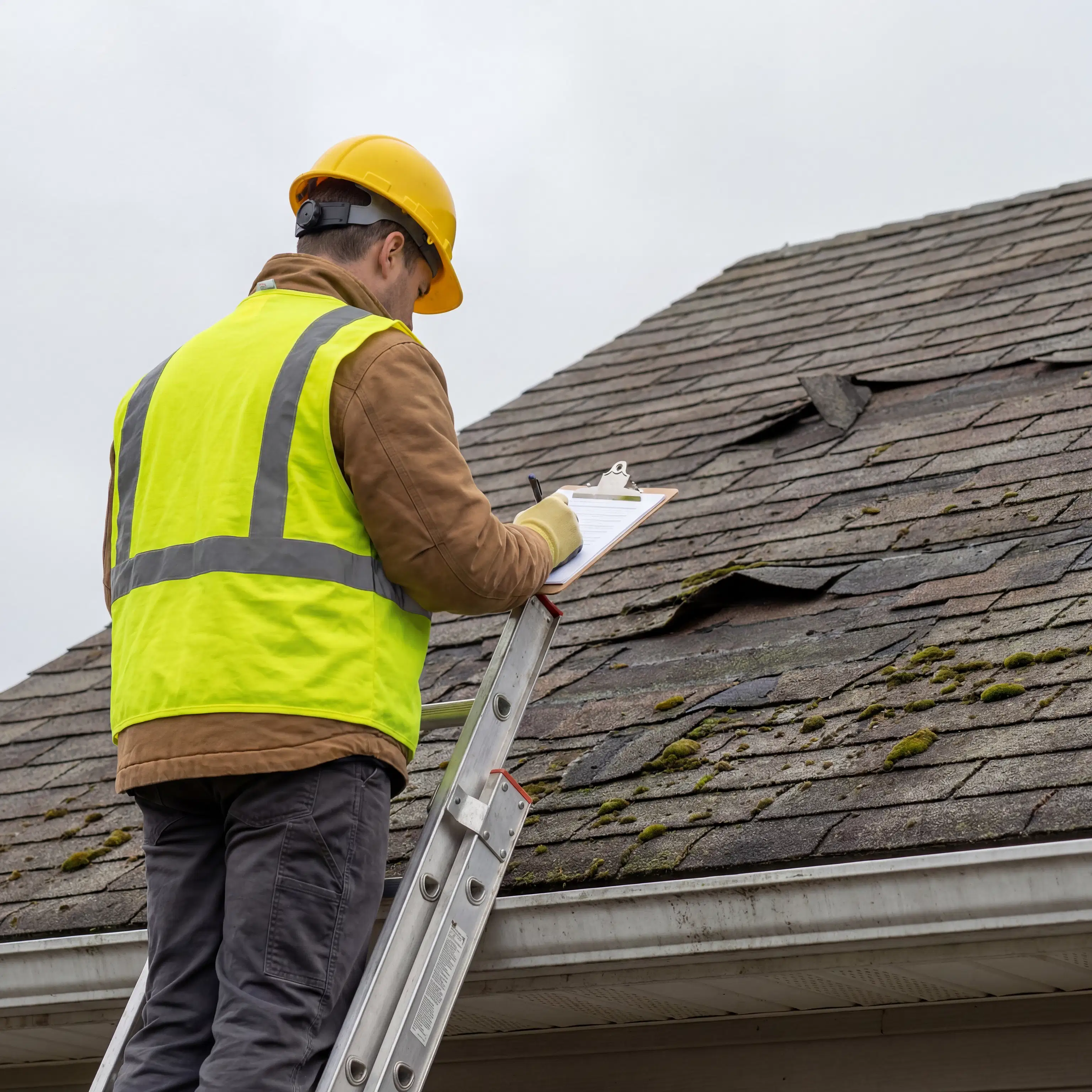
You don't need to climb a ladder to spot potential trouble. A simple walk around your property after a storm can reveal a lot about your roof's condition. Use binoculars for a closer look if you have them.
- Shingles in the Yard: Finding shingles on the ground is an obvious red flag. High winds can easily lift and tear them off, leaving your roof's underlayment exposed.
- Clogged Gutters or Granules: Look at your downspouts. If you see a collection of black, sand-like granules, it means the protective top layer of your asphalt shingles is washing away, significantly shortening your roof's lifespan.
- Damaged Flashing: Flashing is the metal stripping around chimneys, vents, and skylights. If you see any pieces that look bent, rusted, or pulled away from the roof, it creates a prime entry point for water.
- Stains on Your Siding: Water from a roof leak doesn't always go straight down. It can run behind your gutters and down your exterior walls. If you notice water stains or discoloration on your siding, it could be originating from a problem with your roof's edge.
Why You Shouldn't Ignore a Small Leak
It can be tempting to put a bucket under a small drip and forget about it, but even a minor leak is a major threat to your home. Over time, that small amount of water can lead to significant problems that are much more expensive to fix than the initial leak itself. Unaddressed leaks can cause:
- Structural Damage: Chronic moisture rots the wooden decking and rafters that support your roof, compromising its structural integrity.
- Health Hazards: Mold and mildew can spread throughout your home's structure and even into your HVAC system, negatively impacting your family's respiratory health.
- Reduced Energy Efficiency: Water-soaked insulation loses its ability to insulate, forcing your heating and cooling systems to work harder and driving up your utility bills.
After a storm, be wary of out-of-town "storm chasers" who knock on doors with high-pressure tactics. It's always best to work with a trusted, local company that understands our region's weather and is accountable to our community.
Don't Wait for a Drip to Become a Disaster
Spotting the signs of a hidden roof leak early is the key to protecting your home's value and your family's safety. From subtle stains on the ceiling to damp spots in the attic, these clues are your home's way of telling you it needs help.
If you've noticed any of these warning signs or simply want peace of mind after a recent storm, don't hesitate to act. The team at SB Roofing Solutions is here to help our Kirksville neighbors. We provide thorough inspections and expert roofing replacement and repair. We specialize in storm damage restoration and can even provide assistance with your insurance claim to make the process as smooth as possible.
Contact us today for a free, no-obligation inspection and ensure your home is secure, safe, and ready for whatever the next Missouri storm brings.